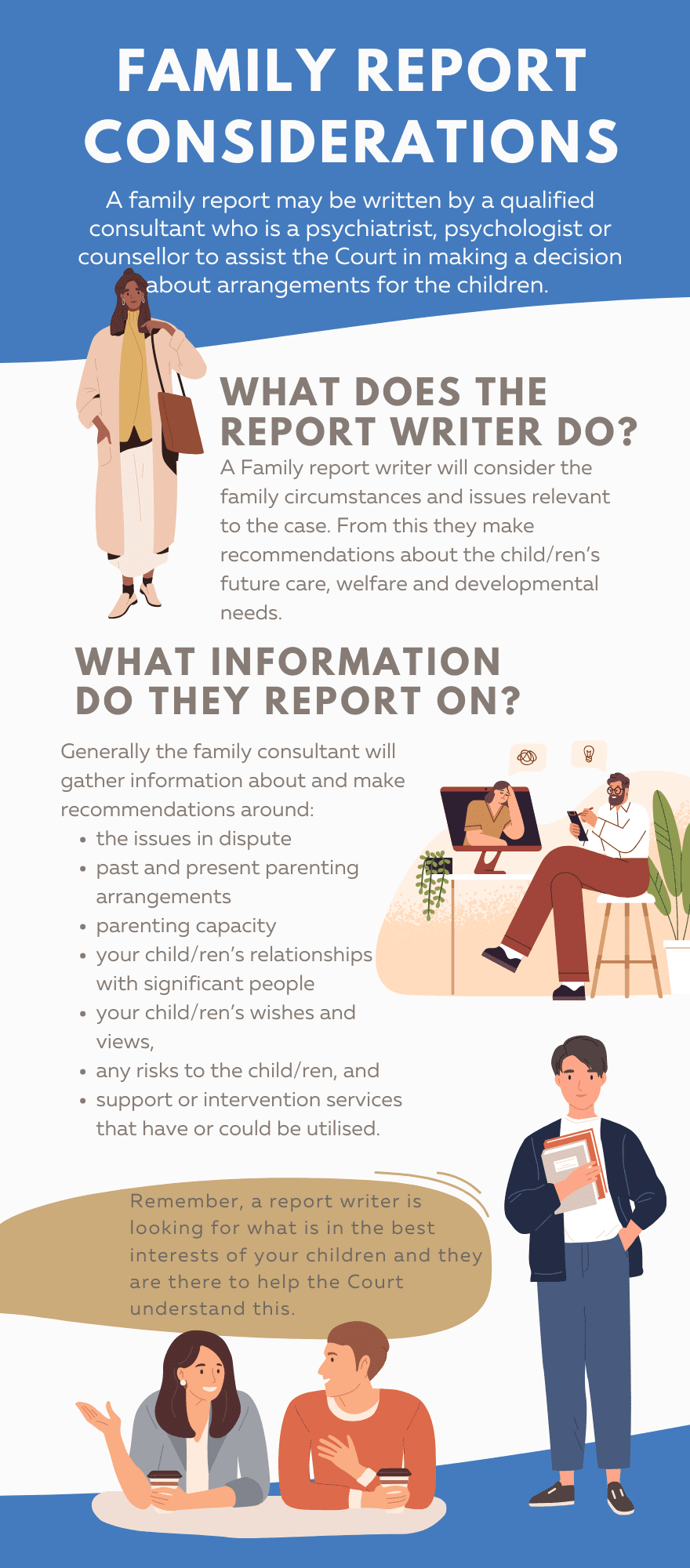
If you are involved in parenting proceedings, there is a good chance you will hear the term Family Report. This article explored what is a family report and why is it so important?
For many parents, the thought of participating in a Family Report assessment can be overwhelming, particularly if they are unsure what to expect or how the report may affect their case.
A Family Report is an independent expert report prepared to assist the Federal Circuit and Family Court of Australia in determining what parenting arrangements are in a child’s best interests.
It is often one of the most important pieces of evidence in parenting proceedings and can have a significant influence on the outcome of your case.
Understanding the purpose of a Family Report and how the process works can help reduce anxiety and ensure you are properly prepared.
Table of Contents
What Is the Purpose of a Family Report?
The purpose of a Family Report is to provide the Court with an independent assessment of your family’s circumstances.
Unlike parents, lawyers or other witnesses, the Family Report Writer is not advocating for either party.
Instead, their role is to objectively assess the family dynamics, the needs of the children and the issues in dispute, before providing professional recommendations about what parenting arrangements are likely to be in the child’s best interests.
The report assists the Court by providing independent observations that may not otherwise be available through the evidence of the parties.
Who Prepares a Family Report?
A Family Report may be prepared by:
- a Court-appointed Family Consultant; or
- a privately engaged Family Report Writer.
Family Report Writers are usually experienced psychologists, social workers or counsellors with specialist training in family law and child development.
Their role is to independently assess the family and provide recommendations to assist the Court.
What Happens During a Family Report Interview?
Every family is different; however, the process generally involves interviews with:
- each parent;
- the child (where appropriate);
- step-siblings;
- significant members of the household; and
- any other person the Family Report Writer considers relevant.
The Family Report Writer will usually observe each parent interacting with the child and ask questions designed to better understand:
- the child’s relationship with each parent;
- each parent’s ability to meet the child’s needs;
- communication between the parties;
- family dynamics;
- safety concerns; and
- the practical parenting arrangements proposed by each parent.
The interview is not a test that one parent “passes” and the other “fails”. Rather, it is an opportunity for the Family Report Writer to develop an independent understanding of your family’s circumstances.
Will My Child Be Interviewed?
Not always.
Whether a child is interviewed depends on factors including:
- the child’s age;
- their maturity;
- their level of understanding; and
- whether it is appropriate in the circumstances.
Very young children are often not interviewed.
Where children are interviewed, the process is designed to minimise stress and ensure they feel comfortable expressing themselves.
How Does the Family Report Writer Assess My Child’s Wishes?
If your child is interviewed, the Family Report Writer is not simply recording what your child says.
They are also assessing how and why your child holds those views.
The weight a Court gives to a child’s wishes depends on a number of factors, including:
- the child’s age;
- their maturity;
- their level of understanding;
- whether their views appear to be genuinely held and well informed; and
- whether their wishes appear to have been improperly influenced by another person.
For example, a child’s preference to live with one parent because there are fewer household rules may be viewed differently to a child expressing concerns about their emotional wellbeing or safety.
The Court is interested not only in what a child wants, but also why they hold those views.
For more information on the issue of children’s wishes – check out our article – Can my child choose which parent they live with?
What Does the Family Report Writer Look For?
The Family Report Writer is assessing much more than who your child says they want to live with.
Depending on the circumstances, they may consider:
- the child’s developmental needs;
- the emotional relationship between the child and each parent;
- parenting capacity;
- communication between the parents;
- each parent’s insight into the child’s needs;
- allegations of family violence or risk;
- each parent’s willingness to facilitate the child’s relationship with the other parent (where appropriate); and
- any other matters relevant to determining what arrangements are in the child’s best interests.
Does the Judge Have to Follow the Family Report?
No.
A Family Report is an important piece of evidence, but it does not determine the outcome of your parenting matter.
The Judge makes the final decision after considering all of the evidence before the Court.
However, because a Family Report is prepared by an independent expert appointed to assess the family dynamics and the children’s needs, it is often one of the most influential pieces of evidence in parenting proceedings.
A Family Report may include:
- observations of each parent interacting with the child;
- an assessment of each parent’s capacity to meet the child’s needs;
- the child’s expressed wishes (where appropriate);
- observations about the family dynamics; and
- recommendations as to what parenting arrangements are likely to be in the child’s best interests.
While the Court is not bound to follow the recommendations contained in the report, they are frequently given significant weight.
It is important to remember that a Family Report is only one piece of evidence before the Court. The Judge will also consider the evidence of each parent, any independent witnesses, expert reports, documentary evidence and any other material that is relevant when determining what parenting arrangements are in the child’s best interests.
Practical Tips Before Your Family Report Interview
While you cannot control the outcome of a Family Report, you can help ensure the process accurately reflects your family by:
- answering questions honestly;
- focusing on your child’s needs rather than your dispute with the other parent;
- avoiding unnecessary criticism of the other parent;
- encouraging your child to speak openly without coaching or influencing them; and
- remembering that the purpose of the assessment is to assist the Court in understanding your family—not to determine a “winner”.
Family Report Writers are highly experienced professionals who regularly assess separated families. They are trained to identify rehearsed responses, coaching and attempts to manipulate the assessment.
Being genuine, child-focused and cooperative is almost always the best approach.
What If I Don’t Agree With the Family Report?
It is not uncommon for one or both parents to disagree with some or all of a Family Report.
If you believe the report does not accurately reflect your family’s circumstances, it is important not to panic.
A Family Report is only one piece of evidence before the Court, and the Judge will ultimately consider all of the evidence when determining what parenting arrangements are in your child’s best interests.
Depending on the circumstances, there may be options available, including asking the Family Report Writer questions during the hearing, presenting other evidence or, in some cases, seeking permission for further expert evidence.
If you have concerns about the contents of a Family Report, you should obtain legal advice before taking any further steps.
For a more detailed explanation of your options, read our article “What If I Don’t Agree With the Family Report?”
How Barton Family Lawyers Can Help
Preparing for a Family Report can be stressful, particularly if you are unsure what to expect or how the report may affect your parenting matter.
At Barton Family Lawyers, we regularly assist parents before, during and after the Family Report process. We can help you understand what to expect, prepare for the assessment and advise you on the appropriate steps if you disagree with the report or recommendations.
Our goal is to ensure you are informed, prepared and focused on achieving the best possible outcome for your child.
Contact us to book a reduced rate initial consultation with one of our experienced family lawyers to discuss your individual circumstances.
Learn More About Family Reports
If you would like to learn more about Family Reports and parenting proceedings, we recommend the following free resources:
- Watch our video: What Is the Purpose of a Family Report?
- Read our article: Can My Child Choose Which Parent They Want to Live With?
- Read our article: What If I Don’t Agree With the Family Report?
These resources provide further practical guidance on one of the most important stages of parenting proceedings.
Frequently Asked Questions
What is a Family Report?
A Family Report is an independent expert report prepared to assist the Family Court in determining what parenting arrangements are in a child’s best interests.
Is a Family Report compulsory?
Not in every parenting matter. However, where one is ordered by the Court, parents are generally expected to participate.
Will my child be interviewed?
It depends on the child’s age, maturity and the circumstances of the case. Very young children may not be interviewed.
Does the Judge have to follow the Family Report?
No. The Judge makes the final decision after considering all of the evidence. However, Family Reports are often given significant weight because they are prepared by independent experts.
What if I don’t agree with the Family Report?
You should obtain legal advice. A Family Report is only one piece of evidence, and there may be options available depending on your circumstances.